

What If There's No Wrong Decision?
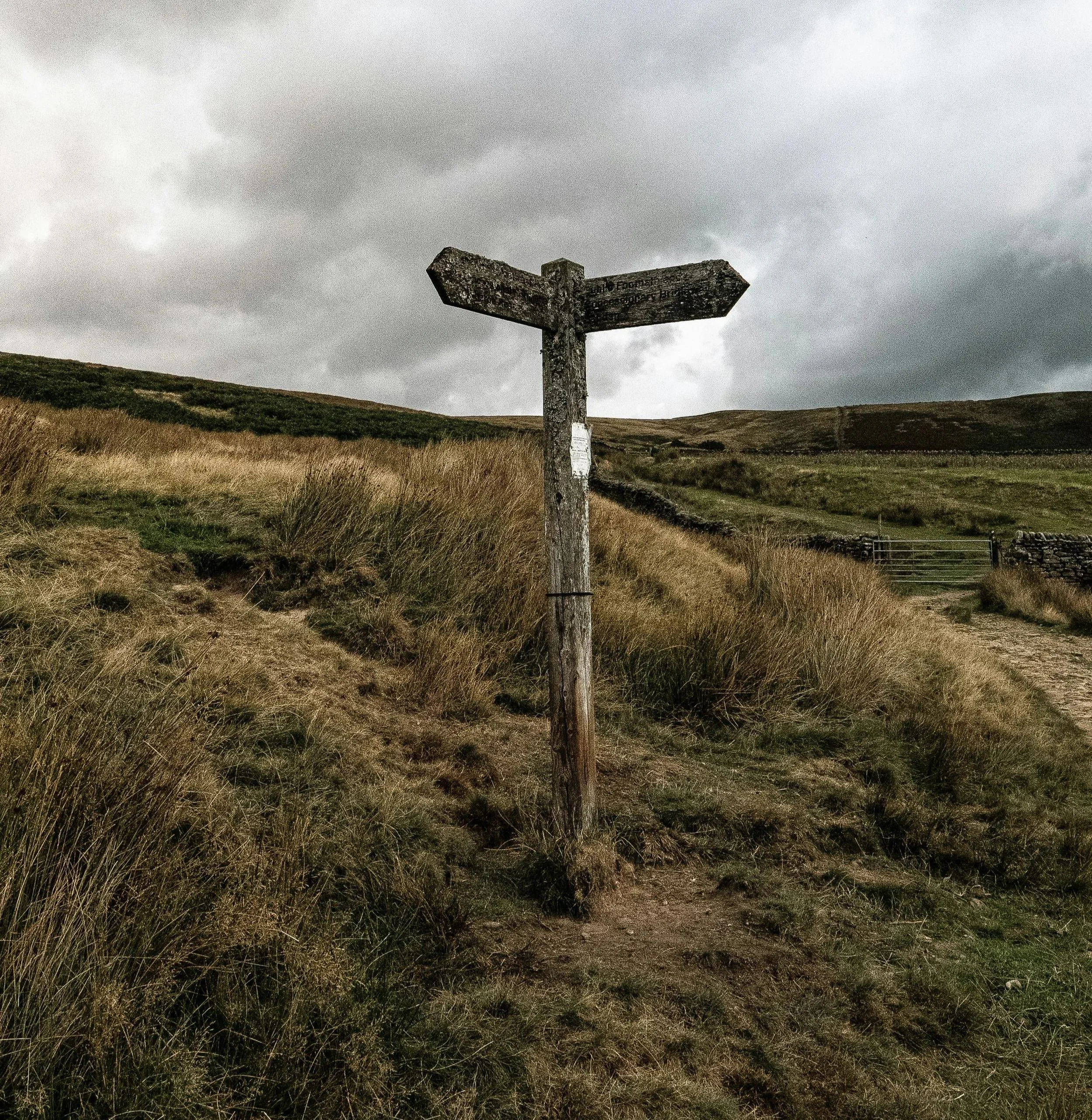
There's a particular kind of mental tug-of-war that shows up when we're standing at a decision point.
Two (or more) paths. Each with its own set of "what ifs." Each carrying the quiet pressure of getting it right. And often, we stay there longer than we'd like, thinking, weighing, looping, hoping that if we just analyse a little more, the right answer will reveal itself.
Recently, I was reminded of a perspective from Ellen J. Langer that gently disrupts this whole pattern:
"Instead of trying to make the right decision, make the decision right."
I first heard her share this idea years ago on a podcast and it stopped me in my tracks. It reappeared at exactly the right moment, when I needed to hear it most, both for myself and for the clients I was sitting with, this time printed boldly in the pages of the new edition of New Philosopher that had just landed in my mailbox.
I'll be honest, I've been living this question myself lately. With certifications across health coaching, life coaching, and leadership coaching, and now stepping into culture change work, I'm no stranger to the crossroads of possibility. More doors open, more paths appear, and the question of where to focus your energy becomes its own kind of beautiful challenge. Langer's idea landed differently the second time around because I wasn't just reading it as a coach. I was sitting inside it.
Is there actually a "right" decision?
When you sit with that question for a moment, something interesting happens.
We often assume that somewhere, hidden beneath all our thinking, there is a clearly superior choice waiting to be uncovered. That if we could just gather enough data, weigh enough pros and cons, or think hard enough, we'd find it.
But in many of life's decisions? There isn't a single, objectively "right" path. There are simply different paths, each with potential.
What we actually tend to do
If we're honest, most of us don't conduct a perfectly rational cost-benefit analysis before making a decision. More often than not, we lean in a direction, make the call, and then gather evidence to support it. We justify. We rationalise. We make it make sense.
This is worth pausing on, because it's actually what behavioural economists have been documenting for decades. Daniel Kahneman's work showed that human decision-making rarely follows the tidy logic we imagine it does. We're not the cool, calculating analysts we believe ourselves to be. We're influenced by loss aversion, by framing, by the stories we tell ourselves after the fact.
And that's actually the key insight. If we're already shaping the story after the fact, we have more agency than we think. The story we tell about a decision, how we frame it, own it, and build around it, plays a significant role in determining how it unfolds. Which means the quality of a decision isn't fixed at the moment of choosing. It's shaped by everything that comes after.
So what if we brought that process out into the open and used it intentionally?
Making the decision right
This is where Langer's idea becomes incredibly freeing.
Rather than placing all the pressure on choosing the perfect option, the energy shifts to: "How do I commit to this decision and move forward in a way that makes it right?"
It's subtle and powerful. It redirects your focus from hesitation to action, from doubt to ownership, from regret to learning. And with that shift, something else happens. You get your momentum back.
Because here's what's true: the mindset we bring to a decision, the way we commit to it, talk about it, and build around it, goes a long way toward determining whether it works. Two people can make the same choice and arrive at completely different outcomes, not because one chose better, but because one backed themselves more fully. Ownership creates momentum. Momentum creates results. And results, over time, have a way of making the decision look right.
Momentum over perfection
One of the patterns I see often in coaching is this: people aren't stuck because they lack capability. They're stuck because they're trying to eliminate uncertainty before they move.
Movement itself is what creates clarity. Taking a step, any step, generates feedback, data, lived experience. From there, you can adjust, pivot, refine. Standing still, on the other hand, rarely brings relief. Inertia often feels heavier than making an imperfect choice. A leap, a coin flip, a first move kickstarts something. And once you're in motion, you're no longer guessing. You're engaging.
The regret research is worth knowing
Harvard psychologist Daniel Gilbert, in his landmark book Stumbling on Happiness, found something that tends to surprise people: across every age group and walk of life, people regret the things they didn't do far more than the things they did. The most common regrets, it turns out, are the unchosen paths, the conversations never started, the leaps never taken.
Why? Because when we act and it doesn't go the way we hoped, our minds are remarkably good at finding the learning in it. When we don't act at all, there's nothing to work with. The "what if" just lingers.
This is what makes the shift from "I wish I hadn't" to "I'm glad I did" so meaningful. The action itself, whatever the outcome, tends to be something our minds can make peace with. The inaction is what haunts.
When things don't go to plan
With this mindset, those moments filter differently. The experience becomes a learning experiment, rich with insight, perspective, and growth. And importantly, it keeps your relationship with yourself intact.
Because the narrative shifts too. Rather than "that was the wrong decision," the question becomes "what did I do with it?" That's a question with answers. And answers are something you can work with.
A few ways to "make the decision right"
If you're sitting with something right now, here are some approaches worth exploring:
Set a decision boundary. Give yourself a clear timeframe to decide. Constraints create movement.
Choose based on alignment, not certainty. Ask: which option feels more aligned with who I want to be?
Commit fully. Once you've decided, shift out of evaluation mode. Back yourself. Act as though this decision is the right one and see what unfolds.
Define what "making it right" looks like. What actions would help this decision succeed? What mindset will support you?
Build daily evidence. Take at least one action every day that supports your decision. Over time, those actions accumulate into proof, for your brain and for yourself, that this was the right path. Psychologist Leon Festinger's research on cognitive dissonance shows that we are wired to close the gap between what we do and what we believe. Daily action essentially tells your brain: this is who I am now. The decision becomes right because you keep choosing it.
Build in reflection points. You're not locked in forever. Check in as you go. Adjust where needed.
Treat it like an experiment. Replace pressure with curiosity: what can I learn from this? Psychologist Barbara Fredrickson's research on what she calls the "broaden and build" theory found that positive emotions like curiosity and openness literally expand our thinking, widening the range of actions and solutions we can see. When we approach a decision with curiosity rather than fear, we access more of our own capability. This alone opens possibility.
The "right" decision is often something we create after we choose, through our actions, our mindset, and our willingness to engage with whatever unfolds.
So if you're standing at a crossroads right now, you might not need more thinking.